
The Best Evening Routine for Better Sleep
A flexible 60-minute wind-down — three quiet stretches of 20 minutes — that bends around late nights and early mornings without falling apart.
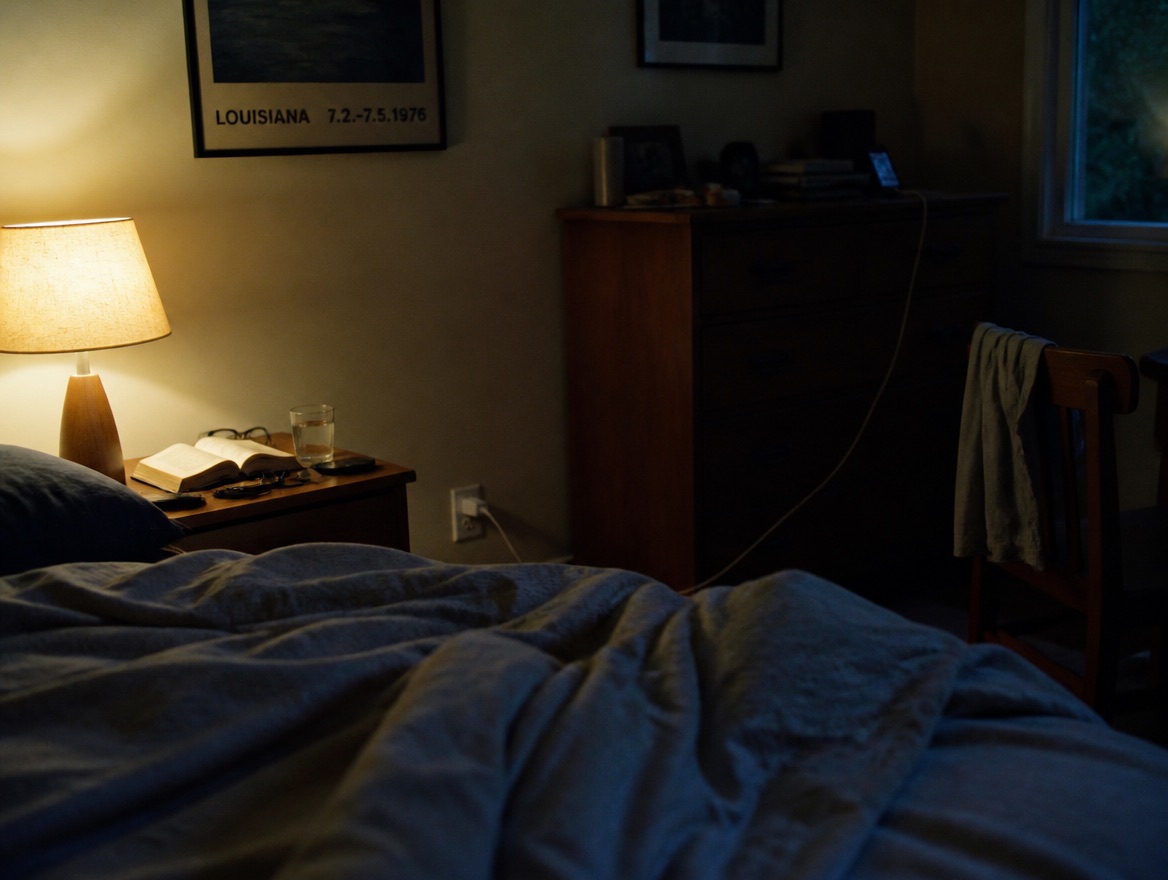
Most evening routines fail for the same reason: they’re too rigid. A perfect ninety-minute ritual that only works on Tuesdays isn’t a routine — it’s a wish. The honest working answer is simpler. A flexible sixty-minute wind-down, loosely structured and easy to compress, will do more for your sleep than any elaborate sequence you can only manage on a quiet week.
The point of the hour isn’t to be precious. It’s to give your body a clear signal that the day is closing.
Why an evening routine works at all
Sleep doesn’t arrive on command. It’s the result of a slow turning-down — of light, of input, of effort — that the body reads as permission to let go. When that turning-down happens in fits and starts, the body keeps one foot in the day. When it happens reliably, even briefly, it lands much sooner.
Research has linked consistent pre-sleep habits to shorter sleep latency (the time it takes to fall asleep) and steadier sleep through the night. The mechanism isn’t mysterious. Lower light tells the body it’s late. A quieter mind stops adding new tasks. A predictable order of small actions — the same lamp, the same book, the same glass of water — works as a cue, the way a familiar drive home eventually drives itself.
What an evening routine is not: a productivity slot, a place to journal your goals, a moment to plan tomorrow in detail. Those things can sit at the very start of the wind-down, briefly, but they shouldn’t sprawl. The broad evidence on sleep is consistent on one point — the closer to bed, the less stimulating the input.
A 60-minute wind-down, broken into three parts
Think of the hour as three twenty-minute stretches, each with a different job. You don’t need a timer. You need a rough order.
| Minutes | What it’s for | What it looks like |
|---|---|---|
| 0–20 | Physical reset | Dim the lights one notch. Brush teeth, wash face. Lay out tomorrow’s clothes. Tidy the surfaces you’ll see first in the morning. |
| 20–40 | Low-stimulation activity | A book, a slow chore, a quiet conversation, a short walk if it’s warm. Nothing that asks for sharp attention. No work email. |
| 40–60 | Bed-ready calm | In bed, lamp on low. Reading is fine. Phone in another room or face-down across the room. Lights out when you feel drowsy, not when the clock says so. |
The first twenty minutes are about closing the day physically. Bright overhead lights off; lamps on. The small admin of tomorrow — clothes, bag, coffee set up — gets done now, while you still have a little energy, so your brain isn’t running through it at midnight.
The middle twenty minutes are the most overlooked. This is the stretch where most people scroll. The job here is just to do something gentle that occupies you without lighting you up. A novel works well. So does a slow tidy of one room, a shower, or sitting with a cup of something warm. It doesn’t have to be virtuous. It just has to be quiet.
The last twenty minutes are in bed. The bed is for sleep and not much else, but a few pages of a paper book is part of the cue for most people, not against it. The non-negotiable here is the phone. Even a brief check resets the clock on your wind-down, because it brings the day’s input back into the room.
Adapting it to a late night or an early morning
The hour is the ideal, not the requirement. On nights it won’t fit, the routine has to compress without collapsing.
If you got home late, run a ten-minute version. Skip the middle stretch entirely. Do a fast physical reset — teeth, face, lights down, clothes for tomorrow set somewhere visible — and then go straight to the third stretch in bed. Read a few pages of something easy and put the lamp out. The wind-down is shorter, but the signal is still there: lights are low, the phone is away, the day is closed.
If you have to be up early, the trade is the opposite. Don’t try to fall asleep earlier than your body wants — that usually backfires. Instead, start the wind-down earlier, so the same hour ends at an earlier bedtime. Move dinner forward by thirty minutes if you can. Begin the physical reset right after.
What stays non-negotiable, even in the short version:
- Lights come down before bed. Overheads off, lamps on, screens dim.
- The phone is not in your hand in the last stretch. Across the room is enough.
- The order is roughly preserved: physical reset, then quieter input, then bed.
What can flex: how long each stretch runs, whether you read or just sit, whether you tidy or skip it, whether the shower is tonight or tomorrow morning. The shape matters more than the minutes.
If you’ve tried a consistent wind-down for a few weeks and sleep still doesn’t come, or you’re waking up tired most mornings despite enough time in bed, that’s worth raising with a clinician. A routine helps, but it isn’t a treatment for an underlying sleep problem.
The bottom line
A good evening routine isn’t a ritual you have to defend — it’s a soft slope down to sleep. Sixty minutes in three loose parts works on a normal night; ten minutes works on a hard one; the order matters more than the length. Keep the lights low, keep the phone away, and let drowsiness, not the clock, decide when the lamp goes out.