
Why Tiny Habits Beat Big Resolutions
The quiet case for shrinking change until it's almost too easy to skip — and letting small, steady habits do the heavy lifting.
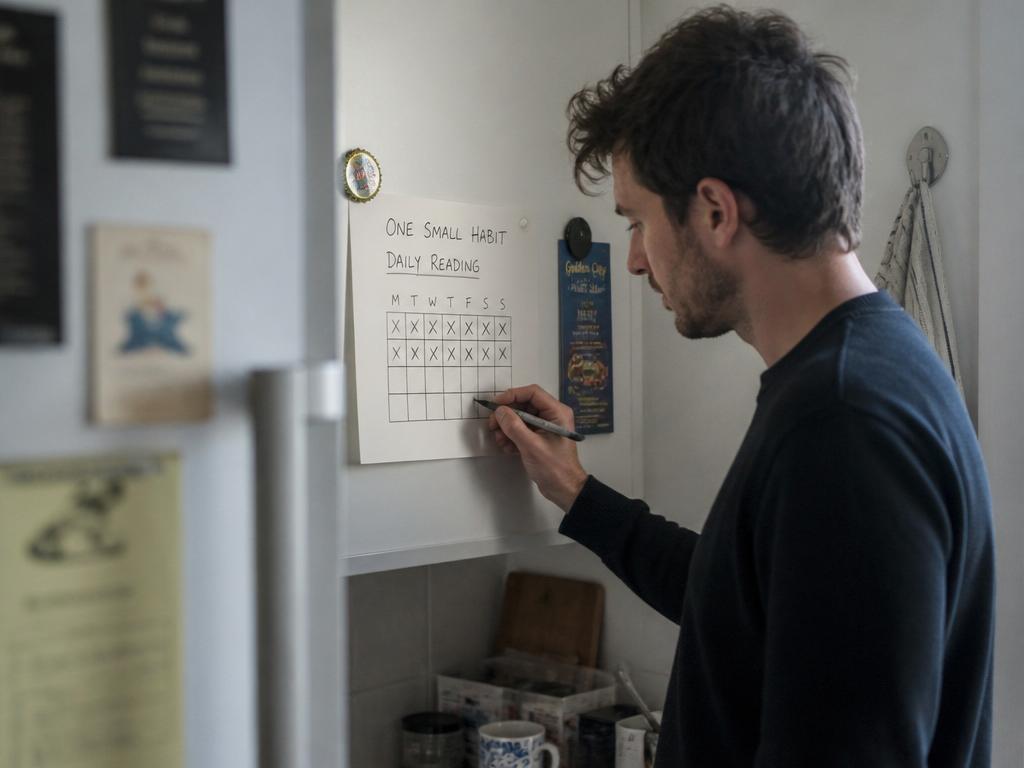
Big resolutions are thrilling for about a week. Then real life arrives, motivation fades, and the grand plan quietly collapses. Tiny habits work the other way around — unimpressive at first, but far more likely to still be standing months later.
Why willpower runs out
The classic resolution leans almost entirely on motivation and willpower: a burst of determination to change everything at once, starting now. The problem is that willpower is a finite, fluctuating resource. It feels abundant in a hopeful moment, but it doesn’t hold steady through tired days, busy weeks, and ordinary low moods.
When a big goal depends on summoning that much effort day after day, it’s running on a fuel that inevitably runs low. The first stressful week, the first off day, the first time life gets in the way — and the whole ambitious structure, built on willpower alone, tends to wobble and fall.
This is why so many sweeping resolutions fade fast. It’s not a personal failing or a lack of seriousness. It’s that the approach asks for sustained intensity that no one can reliably supply. The fix isn’t to want it more; it’s to need less willpower in the first place.
Making the first step laughably small
The alternative is to shrink the change until it barely requires willpower at all. Instead of a dramatic overhaul, you start with a version of the habit so small it feels almost silly — something you could do even on your worst, busiest, least motivated day.
The instinct is to dismiss this as too trivial to matter. But that’s exactly its strength. A laughably small habit clears the highest hurdle of all: actually doing it, consistently, when motivation is low. And consistency, not intensity, is what turns a behavior into an automatic part of who you are.
Consider the difference in mindset:
| Big resolution | Tiny habit |
|---|---|
| ”Completely transform this, starting now" | "Do the smallest possible version, today” |
| Depends on high motivation | Works even on low-energy days |
| Collapses after the first missed day | Easy to keep, easy to restart |
A few ways to make the first step small enough:
- Scale it down past the point of doubt. If a habit feels hard to commit to, shrink it further until “yes” is effortless.
- Make showing up the win. Putting on your shoes, opening the notebook, doing one repetition — these count, because they keep the chain alive.
- Lower the bar on bad days. A tiny habit means even your minimum still counts as a success, so a hard day doesn’t break the streak.
The goal early on isn’t results. It’s to make the habit so easy that skipping it feels harder than just doing it.
Letting momentum build
Here’s the quietly powerful part: tiny habits rarely stay tiny. Once a small behavior becomes automatic — something you do without negotiating with yourself — it tends to grow naturally. The hard part was never the size of the action; it was building the consistency. Once that’s in place, expanding it feels easy.
You’ll often find that the small version invites more on its own. The two minutes of movement stretches to ten because you’re already going. The single page becomes a few because you’re already reading. You’re not forcing growth through willpower; you’re letting it follow the momentum that consistency creates.
To let that momentum build gently:
- Protect the habit, not the size. On good days, do more if you like — but never let “more” become a new minimum you have to live up to.
- Trust the slow climb. Small, steady actions compound quietly. Progress that feels almost invisible day to day adds up over weeks and months.
- Celebrate showing up. A little acknowledgment when you do the habit, however small, helps it feel rewarding and reinforces the loop.
- Restart without drama. Miss a day? Just do the tiny version tomorrow. Because the bar is low, getting back on is easy.
There’s a deeper kindness in this approach. Big resolutions often come wrapped in self-criticism — a sense that you’re not enough as you are and must overhaul everything immediately. Tiny habits start from a gentler place: small, doable steps, repeated patiently, trusting that consistency will carry you further than any burst of willpower ever could.
The bottom line
Big resolutions fail not because you lack discipline but because they run on willpower, which always runs out. Tiny habits flip the logic: shrink the change until it’s almost too easy to skip, prize consistency over intensity, and let momentum quietly grow the habit on its own. Start laughably small, be gentle with the off days, and let small steady actions do what grand plans rarely manage.