
How to Stop Doomscrolling at Night
Why the bedtime scroll keeps pulling you back, and the friction-based tweaks that quietly break the loop without willpower.
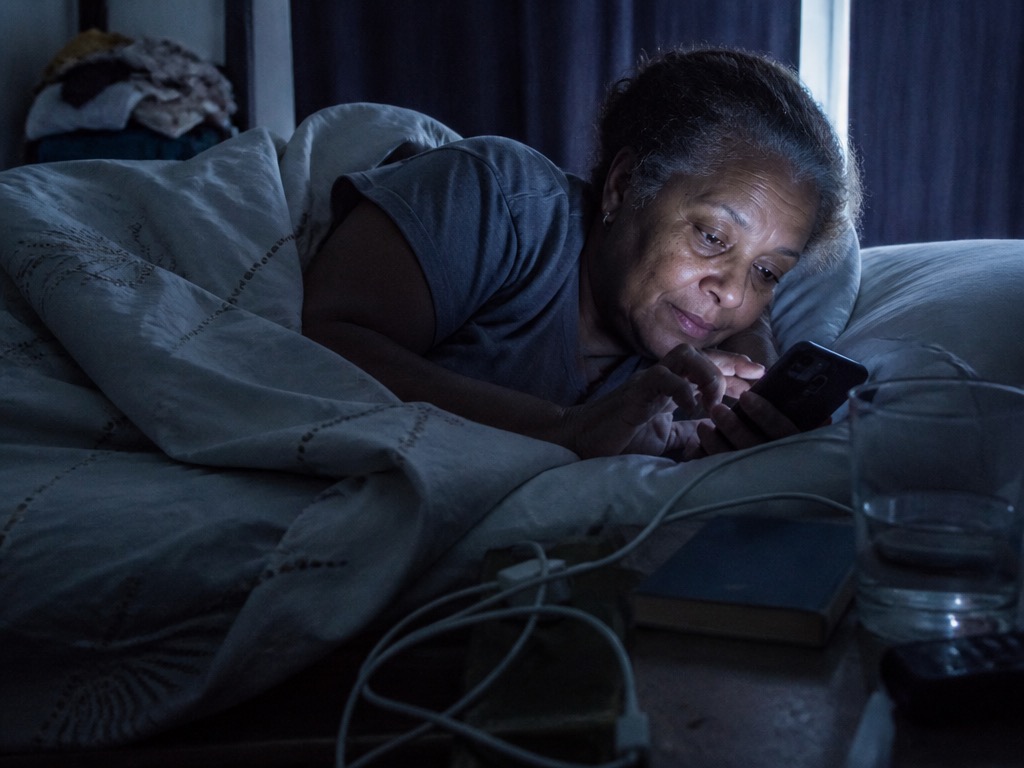
You meant to put the phone down twenty minutes ago. Maybe an hour. The room is dark, your eyes ache a little, and you’re not even enjoying the feed anymore — yet your thumb keeps moving. Almost everyone who has used a phone at night knows this loop. It is rarely about a lack of willpower; it is about a small machine designed to be hard to put down, meeting a tired brain that is no longer making good decisions.
The good news is that the loop is mostly held together by tiny, removable conveniences. Take a few of them away and the whole thing softens.
Why the bedtime scroll keeps pulling you back
Late evening is, almost by design, the worst time to ask yourself to make a calm choice. Your prefrontal cortex — the part that says enough, go to sleep — is winding down along with the rest of you. Your reward system, less tired, is happy to keep grazing on whatever the feed serves up next. So the part of your brain that wants to scroll is wide awake, and the part that wants to stop is half-asleep already.
Social and news feeds are also tuned to behave the way slot machines do: most pulls are bland, but every so often something genuinely amusing, useful, or alarming appears. That unpredictability — researchers call it variable reward — is what makes a feed so easy to keep flicking, and so hard to leave on a clean note. There is no natural ending. The credits never roll. You stop when you give up, which feels like failure even when it isn’t.
The bedtime scroll also feels like rest. After a long day, lying down with a screen looks a lot like switching off. In practice it tends to do the opposite: bright light close to the eyes nudges your body clock later, the content keeps your mind active, and any flash of bad news or social comparison can wake the nervous system back up just as it was settling. You finish more wired than when you started, and a little more behind on sleep.
None of this means you are weak-willed. A tired person, a bright screen, and an endless feed are a difficult combination — and the honest fix is rarely “try harder.” It is to change the setup.
Friction beats willpower
The most useful idea here is friction. Not big, punishing barriers — small, slightly inconvenient ones, placed between you and the easy scroll. Each one is trivial on its own. Stacked together, they quietly tip the balance away from the phone and towards the wind-down you actually wanted.
A few that tend to work:
- Move the charger out of the bedroom. Charging your phone in the hallway, kitchen, or living room is the single change most people find decisive. The phone is still there if you genuinely need it; it is just no longer within arm’s reach of the pillow.
- Set a soft “phone down” time. Pick a time — say, an hour before you want to be asleep — and treat it as the moment the phone goes on its charger, somewhere else. Not a rigid curfew, more a default that you only break on purpose.
- Use the dullest mode you can. Greyscale, do-not-disturb, and a stripped-back lock screen all make the device noticeably less appealing without removing it. Your screen-time settings probably already offer most of this.
- Bury the feeds. Move social and news apps off the home screen into a folder a couple of swipes away. The extra two seconds break the half-conscious tap that starts most late scrolls.
- Replace, don’t just remove. Have something easy and pleasant waiting in the phone’s old spot — a book on the bedside table, a notebook, a glass of water, a low lamp. The aim is a gentler thing to reach for, not an empty hand.
- Charge an old-fashioned alarm clock. A cheap bedside clock removes the last honest reason to keep the phone next to you.
| Willpower approach | Friction approach |
|---|---|
| ”I’ll just put it down sooner” | The charger lives in another room |
| Promising not to open the feeds | Feeds buried two swipes deep, greyscale on |
| Fighting the urge in bed | The phone isn’t in bed to fight with |
| Relying on a tired evening you | Decisions made earlier, by a rested you |
The pattern is the same each time: make the easy thing slightly harder, and the better thing slightly easier. You are not relying on a tired version of yourself to win an argument with a feed designed to keep you scrolling. You are arranging the room so the argument barely comes up.
A gentler evening, not a stricter one
It helps to frame all of this as kindness to your future self rather than discipline. The goal isn’t a phone-free monastic evening; it is one that doesn’t end with you frustrated at your own thumb. A short scroll on the sofa, the phone goes to charge, then twenty minutes of something quieter before sleep — for most people, that is the realistic shape of a good night.
If you slip and scroll in bed anyway, treat it lightly. The defaults are still in your favour the next night; one off evening doesn’t undo them. Notice what pulled you back in — a notification, a worry, simple boredom — and, if you can, adjust one small thing. Sometimes it is the charger location. Sometimes it is that you went to bed before you were actually tired, with nothing else to do.
A gentle note: if your scrolling at night feels compulsive in a way these small adjustments don’t touch, or if low mood, anxiety, or persistent sleep trouble are running underneath it, please consider talking to a doctor or a qualified professional. Phone habits sit on top of how you’re doing in general, and sometimes the thing worth attending to is what’s underneath, not the phone.
The bottom line
Doomscrolling at night isn’t a character flaw; it is a tired brain meeting a very well-designed feed in the worst possible setting. Willpower at midnight is a thin defence. Friction — moving the charger, burying the apps, dimming the screen, leaving something kinder within reach — is a much sturdier one. Stack a few small inconveniences between you and the easy scroll, and the loop tends to quietly let go. The evening you wanted was always there underneath it.